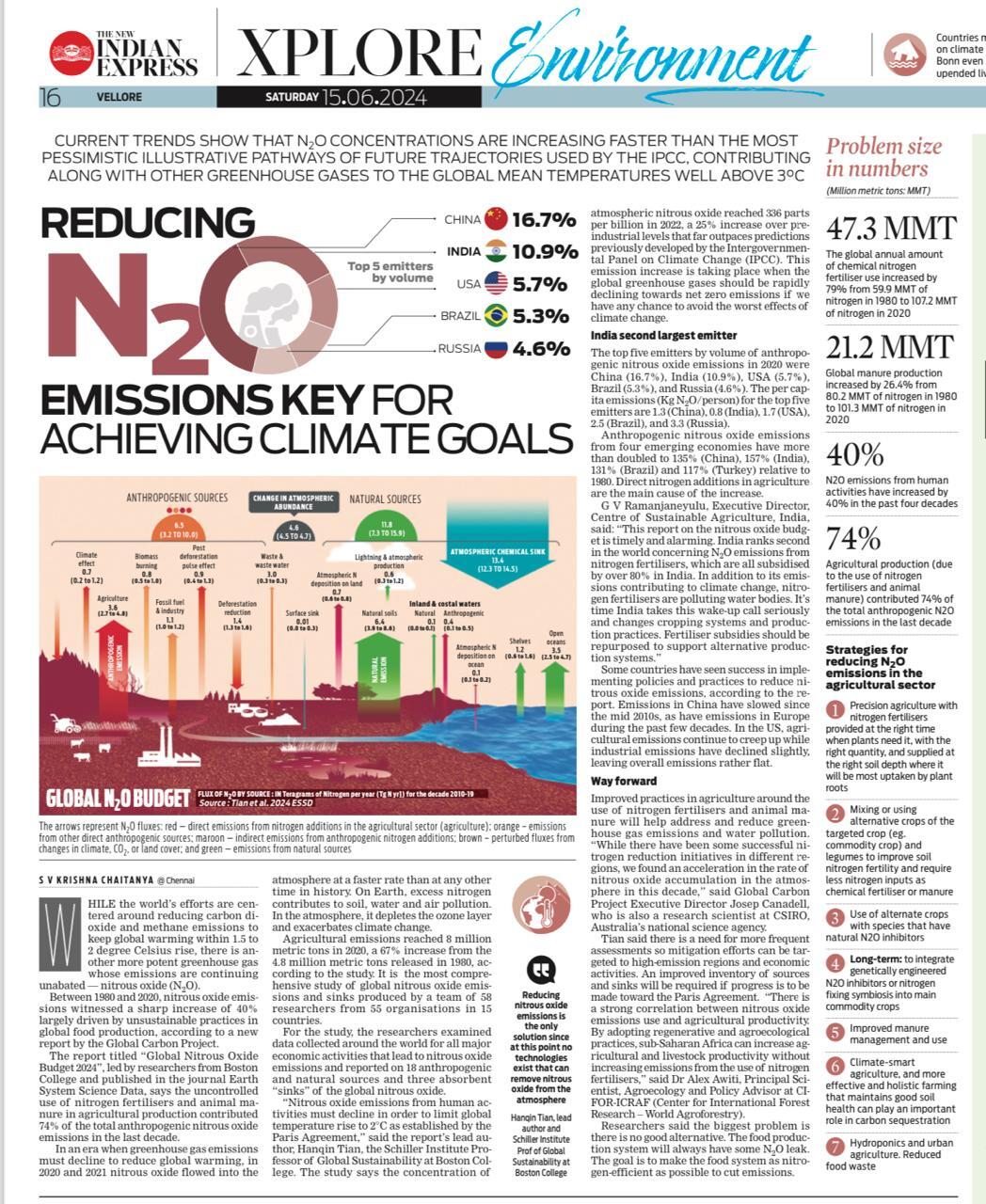
Global carbon project paper on nitrogen budget shows India is second to China with respect to N2O emissions from agriculture particularly chemical fertilizers
we need work on this with targeted approach to reduce Nitrogenous fertiliser use
To have any realistic chance to limit the global warming to 2 degrees rise, all GHG emissions must be reduced. While the world’s efforts are centered around cutting carbon dioxide and methane emissions, a more potent greenhouse gas nitrous oxide is continuing unbated. A sharp increase of 40% is observed between 1980 and 2020.
Read the full story 👇🏿
The key findings are
- Farmers (project participants) have not received monetary benefits.
- Farmers have limited awareness about climate resilient agriculture and carbon credits.
- Two revenue-sharing models: In the first there is no revenue sharing as carbon project is built on existing watershed project for internal auditing; the second project shares revenue with farmers.
- Local implementation partner is important for effective project execution.
- Local community experienced social benefits such as improved water availability, increased Rabi season cultivation and women participation in agriculture.
- Initial adoption of sustainable practices was incentivized by discounts on services such as drone pesticide application.
- Project developers feel that lack of a regulated market, low prices and lower demand for Indian carbon credits makes such projects financially unsustainable.
- Continued adoption is context specific. For example, abundant rainfall led to discontinuation of Alternate Wetting and Drying (AWD) in the Telangana project.
https://cgspace.cgiar.org/bitstream/handle/10568/134967/66684.pdf?sequence=1&isAllowed=y
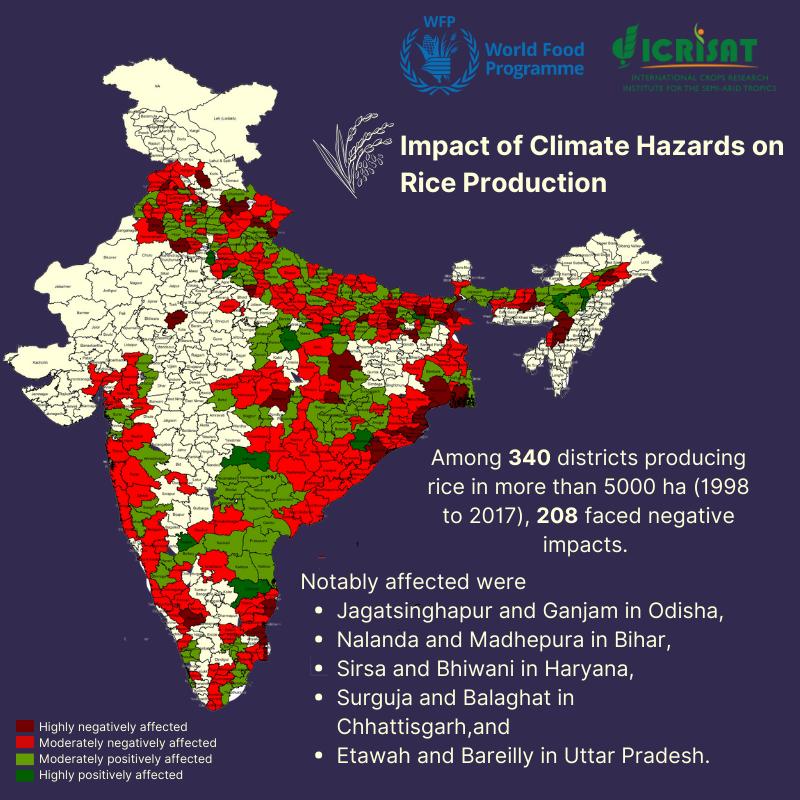
ICRISAT and World Food Program have published a report quantifying climate change impacts on Indian Agriculture
Pulished by WIPO